
Dolphin Strand Feeding on Kiawah Island
March 14, 2025
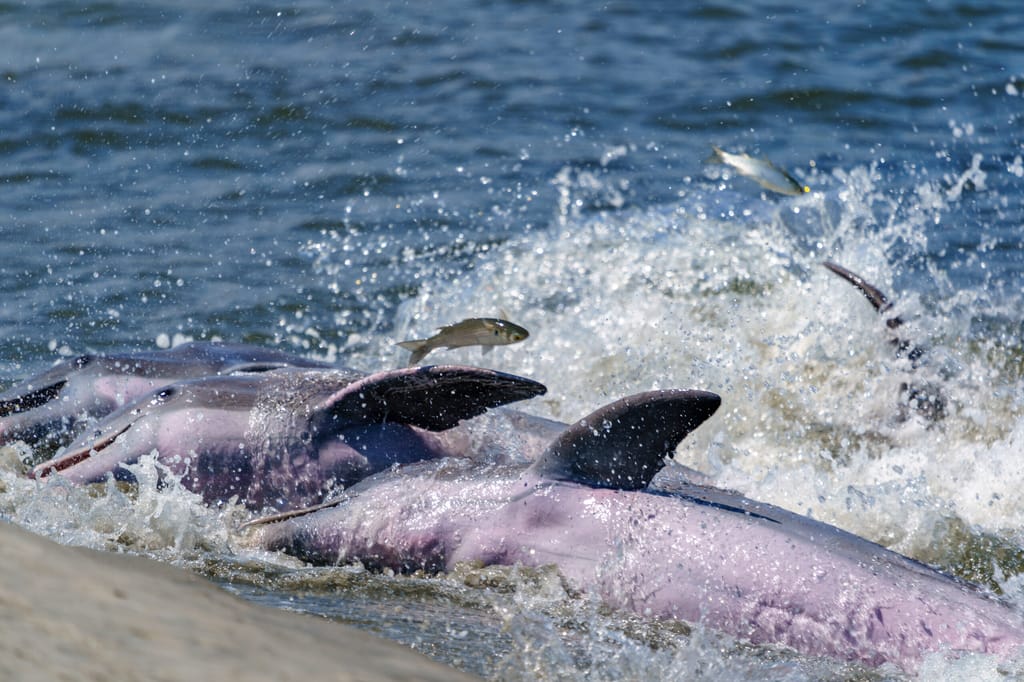
On the tranquil edges of Kiawah Island, a remarkable natural phenomenon unfolds that few places in the world can claim. It’s called strand feeding, a highly specialized hunting behavior exhibited by a distinct group of bottlenose dolphins. To witness it is to experience nature at its most theatrical, intimate, and rare. At Timbers Kiawah, we delight in sharing the island’s natural wonders with our guests, and dolphin strand feeding is undoubtedly among the most mesmerizing.
What Is Strand Feeding?
Strand feeding occurs when dolphins work in coordinated groups to herd schools of fish—most often mullet or menhaden—toward the shoreline. With incredible precision and teamwork, the dolphins drive the fish into shallow waters and then surge out of the water themselves, temporarily stranding their bodies on the mudflats or beach to snatch their catch. Once the fish have been swallowed, the dolphins wriggle their way back into deeper water to repeat the process again.
Just a handful of places in the world—most being along the coasts of South Carolina and Georgia—are known to host wild dolphins that regularly strand feed. Kiawah Island is among the most accessible and reliable locations to observe it in the wild.
Dolphin Habitat on Kiawah Island
The dolphin species inhabiting the salt marshes and tidal creeks surrounding Kiawah are Atlantic bottlenose dolphins, a highly intelligent and social species. These dolphins live in the local waters year-round rather than migrating seasonally. This familiarity with the environment allows them to develop sophisticated hunting techniques like strand feeding, a skill passed from one generation to the next through social learning.
Kiawah’s protected coastal ecosystem provides an ideal environment. The winding creeks, mud banks, and abundant baitfish make it an ideal hunting ground for dolphins, while the relatively undisturbed natural landscape allows them to hunt with minimal interference from human activity.
Where and When to Witness Strand Feeding
Strand feeding is best observed in the shallow salt marshes along the Kiawah River, particularly during low tide, when exposed mudflats offer the perfect stage for this feeding drama. Areas near Captain Sam’s Inlet are among the most promising spots.
Late spring through early fall tends to offer the highest chances of sightings, although strand feeding can occur year-round. Timing your visit around a falling tide increases the likelihood of witnessing this behavior, as the fish are more easily trapped in narrowing creeks and along the shore.
Many of our guests at Timbers Kiawah enjoy taking a guided kayak tour or boat excursion with local naturalists who know just where to look and how to read the conditions. These expert-led outings not only enhance your chances of seeing strand feeding but also provide insight into the behavior, ecology, and conservation of Kiawah’s wildlife. Contact the concierge to reserve an ecological tour during your next visit.
Natural Wonders of Kiawah Island
To watch a dolphin launch itself onto a mudflat in pursuit of a meal is to witness wild intelligence in action. It is a powerful reminder that Kiawah Island is a place where nature thrives not only around us, but also alongside us.
We encourage guests to bring their curiosity, their binoculars, and above all, their sense of wonder. Nature writes her own script here on Kiawah—and sometimes, if you’re in the right place at the right time, you will witness something truly extraordinary.